Jai’s ayurveda centre is getting merged with AYUTRA AYURVEDA

Fresh stories, announcements and offers about Ayurvedic Clinic, Doctor, straight from our business.
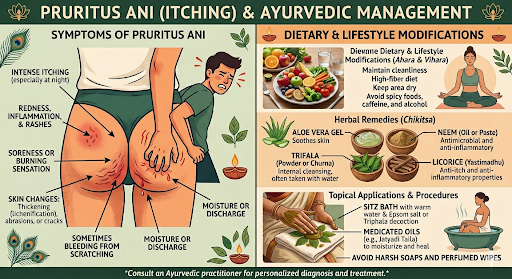
The left side of the graphic illustrates the physical discomfort associated with the condition. Key symptoms identified include: • Intense Itching: Often worsening at night, leading to a cycle of scratching and further irritation. • Inflammation and Redness: Visible rashes and skin irritation caused by the initial trigger or secondary trauma from scratching. • Skin Changes: Chronic cases may lead to Lichenification (thickening of the skin), abrasions, or painful cracks. • Sensory Discomfort: Patients often report soreness, a burning sensation, or localized moisture and discharge. • Trauma: In severe instances, persistent scratching can lead to minor bleeding. Herbal Remedies (Chikitsa) The guide highlights specific herbs known for their cooling and healing properties: • Triphala: Used for internal cleansing and balancing the digestive system. • Neem: Highly valued for its antimicrobial and anti-inflammatory effects. • Aloe Vera: Applied to soothe the skin and reduce burning. • Licorice (Yastimadhu): Used for its natural anti-itch and anti-inflammatory properties. Visit jai’s ayurveda centre for proper treatment of pruritis anii ( itching near lower body) .
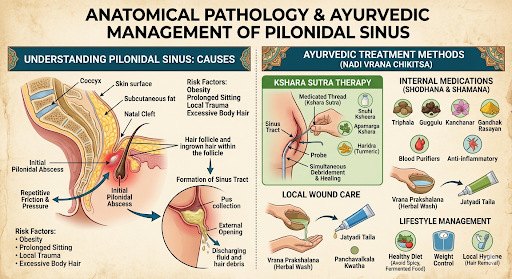
A pilonidal sinus typically occurs at the base of the tailbone (coccyx) in the natal cleft. • Hair Intrusion: Friction and pressure force loose hairs into the skin pores. The body treats this hair as a foreign object, triggering an inflammatory response. • Cyst Formation: A localized abscess or "pocket" forms around the hair. • Sinus Tract: Over time, the infection creates a tunnel (sinus) under the skin, leading to one or more openings on the surface. • Ayurvedic Perspective: It is primarily a Dushta Vrana (vitiated wound) involving an imbalance of Pitta (inflammation/pus) and Kapha (blockage/discharge). Visit Jai’s ayurveda centre for treatment of pilonidal sinus through ayurvedic procedure.
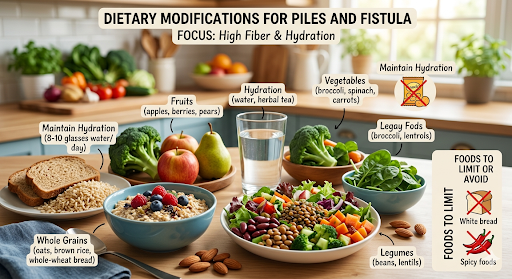
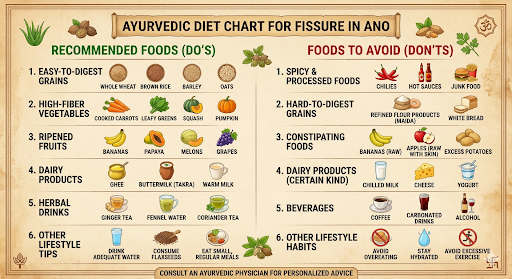
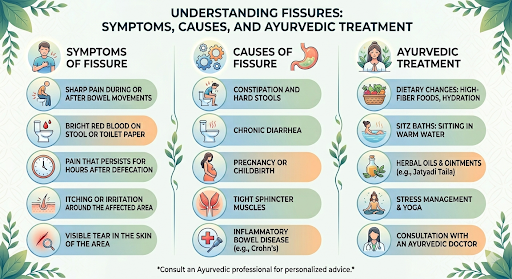
The core philosophy of this diet is to ensure soft bowel movements to prevent further injury while soothing the digestive tract. 1. Recommended Foods (The Do's) These items are "Pathya" (wholesome) and focus on high fiber, hydration, and easy digestion. • Easy-to-Digest Grains: Whole wheat, brown rice, barley, and oats provide the necessary bulk to the stool without being overly heavy on the gut. • High-Fiber Vegetables: Cooked carrots, leafy greens, squash, and pumpkin are highlighted. In Ayurveda, cooked vegetables are preferred over raw ones as they are easier for a "weak" digestive fire (Agni) to process. • Ripened Fruits: Papaya and bananas are natural laxatives. Papaya, in particular, contains enzymes that aid protein digestion and prevent constipation. • Dairy Products (The Ayurvedic Way): * Ghee (Clarified Butter): Essential for lubricating the intestinal walls. • Buttermilk (Takra): Often called "Amrit" (nectar) in Ayurveda for digestive issues; it helps restore gut flora. • Herbal Drinks: Ginger, fennel, and coriander teas help regulate digestion and reduce bloating. Visit Jai’s ayurveda centre for best ayurvedic treatment for fissure ( pain during defeaction).
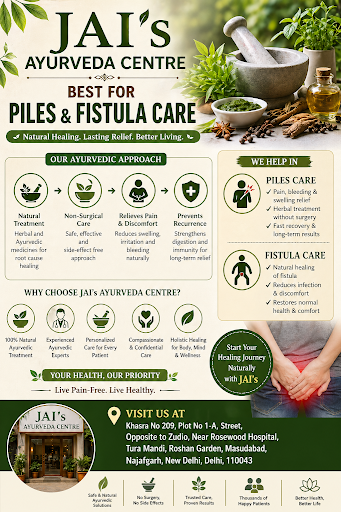
Visit jai’s ayurveda centre for best possible ayurvedic treatment for such diseases
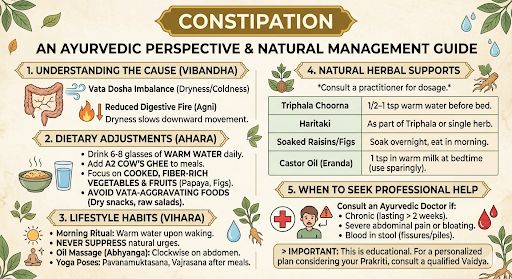
When to Seek Professional Help While home remedies are effective for occasional issues, you should consult an Ayurvedic doctor if: • Constipation is chronic (lasting more than 2 weeks). • It is accompanied by severe abdominal pain or bloating. • You notice blood in the stool (which may indicate a fissure or piles). Visit jai’s ayurveda centre for ayurvedic treatment of constipation.

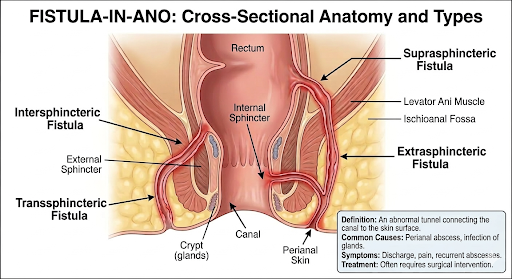
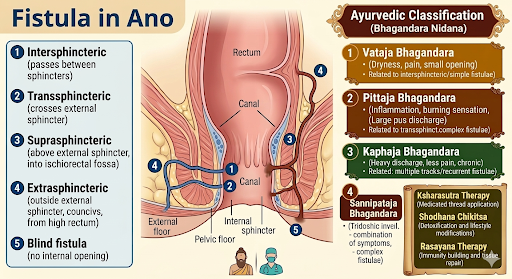
Intersphincteric (1): The most common type. The tunnel stays between the internal and external muscle layers. • Transsphincteric (2): The tunnel goes right through both muscle layers. • Suprasphincteric (3) & Extrasphincteric (4): These are higher up and more complex, looping above or around the main muscle groups. • Blind Fistula (5): A tunnel that has an opening on the skin but doesn't quite connect back to the inside yet. Vataja: Usually involves more intense pain and a "dry" feeling. • Pittaja: Marked by more inflammation, redness, and a burning sensation (associated with "heat"). • Kaphaja: Often involves more persistent discharge and a "heavy" or chronic feeling. • Sannipataja: A combination of all three, usually seen in more complex cases. The only best treatment in ayurveda is kshar sutra treatment. Visit jai’s ayurveda centre for kshar sutra treament