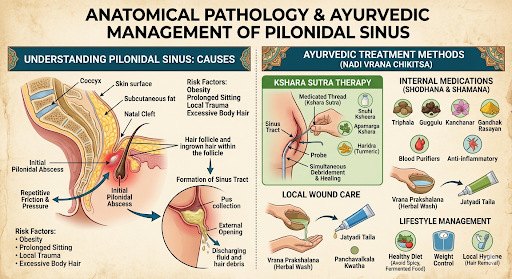
Anatomical Causes & Pathophysiology
Published
A pilonidal sinus typically occurs at the base of the tailbone (coccyx) in the natal cleft. • Hair Intrusion: Friction and pressure force loose hairs into the skin pores. The body treats this hair as a foreign object, triggering an inflammatory response. • Cyst Formation: A localized abscess or "pocket" forms around the hair. • Sinus Tract: Over time, the infection creates a tunnel (sinus) under the skin, leading to one or more openings on the surface. • Ayurvedic Perspective: It is primarily a Dushta Vrana (vitiated wound) involving an imbalance of Pitta (inflammation/pus) and Kapha (blockage/discharge).
Visit Jai’s ayurveda centre for treatment of pilonidal sinus through ayurvedic procedure.