Key Aspects of the Recovery Process
Published
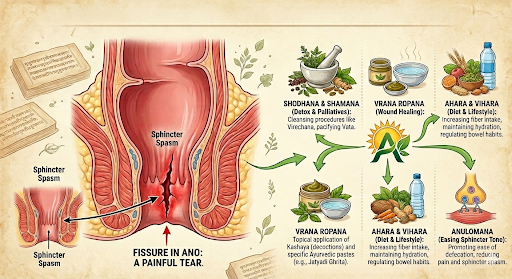
- Relaxing the Muscle (Sphincter Tone): When a tear occurs, the surrounding muscles often tighten or "spasm." This tension can slow down the healing process. Ayurvedic approaches aim to relax these muscles (a process called Anulomana), which helps improve blood flow to the area and reduces discomfort.
- Wound Healing (Vrana Ropana): Specialized herbal preparations and oils, such as Jatyadi Ghrita, are used topically. These traditional formulas are designed to soothe the area, reduce inflammation, and support the skin’s natural ability to repair itself.
- Dietary and Lifestyle Support (Ahara & Vihara): A core pillar of recovery is ensuring smooth digestion. By increasing fiber intake and maintaining proper hydration, the stool becomes softer, preventing further irritation to the area and allowing the body to heal.
- Holistic Balance (Shodhana & Shamana): Ayurveda looks at the internal balance of the body. Treatments are used to pacify internal "heat" (Pitta) or "dryness" (Vata) that may be contributing to digestive issues.